
The Basics of the Canadian Political System
Canada’s political system is fundamentally structured as a constitutional monarchy, which denotes a government headed by a monarch whose powers are limited by a constitution. In Canada, the monarch is represented by the Governor General at the federal level and by Lieutenant Governors in each province. This system establishes the foundation for a parliamentary democracy, where the Executive, Legislative, and Judicial branches work in unison to govern the country.

The role of the monarch, albeit largely ceremonial, remains significant in symbolizing the unity and continuity of the state. While the day-to-day operations of governance are executed by elected officials, the monarch’s presence serves as a reminder of Canada’s historical ties to the British crown, reinforcing the principles of democracy and the rule of law. This relationship underscores a system designed to balance tradition with modern governance.
At the helm of Canada’s government is the Prime Minister, who is the head of government and leader of the ruling political party. The Prime Minister is responsible for setting the government agenda, making key policy decisions, and representing Canada on the international stage. The Prime Minister’s authority is derived from the support of the elected House of Commons, which is part of Parliament alongside the Senate. Together, they create the legislative framework within which the government operates.
The establishment of a constitutional monarchy in Canada was influenced by historical events and precedents, notably the desire for stability amidst the demands for responsible governance during the colonial era. This framework ensures a balance of power, allowing the country to navigate political challenges while maintaining continuity in leadership and governance. In this way, the constitutional monarchy remains an essential characteristic of the Canadian political landscape, contributing to a system that respects both democratic principles and historical traditions.
The Role of Federalism in Canada
Canada’s political landscape is shaped significantly by its federal structure, which delineates the distribution of power and responsibilities between the national government and provincial entities. This division is enshrined in the Constitution Act of 1867, which establishes a clear framework for governance. Under this system, the federal government manages national concerns, such as defense, immigration, and foreign affairs, while provinces are empowered to develop policies related to education, healthcare, and natural resources.
The implications of federalism on policy-making are profound. Different provinces may adopt varied approaches to issues, leading to a diverse range of outcomes across the country. For instance, healthcare is primarily a provincial responsibility, resulting in significant differences in how healthcare services are delivered and funded. While some provinces have innovated successfully with public health initiatives, others may face challenges due to a lack of resources or political will.
Moreover, federalism allows for greater regional governance, enhancing local representation and involvement in the legislative process. This decentralized approach helps address the unique needs of distinct geographic areas, fostering responsiveness to local priorities and conditions. However, the regional disparities can result in tension between federal and provincial governments when it comes to resource allocation and policy priorities.
One salient example of federalism’s influence is observed in environmental policy. The federal government sets broad environmental regulations, yet the provincial governments have the authority to enforce and implement policies that reflect their specific environmental challenges. This can lead to varying standards and practices across jurisdictions, highlighting both the strengths and weaknesses of federalism in addressing complex issues.
Overall, the role of federalism in Canada not only impacts governance and policy outcomes but also reflects the diverse nature of its society. Understanding this dynamic system is crucial for grasping the complexities of the Canadian political landscape.
The Importance of Political Engagement and Activism
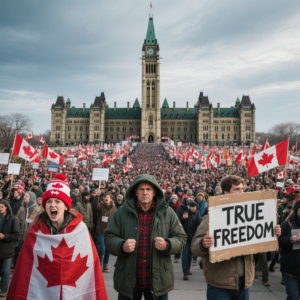
Political engagement and activism play a crucial role in shaping the Canadian political landscape. In a democratic society like Canada, citizens possess the fundamental right and responsibility to influence decisions that affect their lives. This capacity for change can manifest in various forms, such as voting, advocacy, and participating in grassroots movements. Each of these actions contributes to a more responsive and representative governing system.
Voting is perhaps the most direct way for individuals to express their political preferences. In recent elections, increased voter turnout has shown that Canadians are becoming more aware of the power of their votes. Moreover, movements such as the youth-led climate strikes have illustrated how popular mobilization can drive political change. These grassroots efforts do not only advocate for policies but also mobilize broad segments of the population, making their voices heard on critical issues.
Advocacy is another powerful tool in the hands of citizens. By organized groups that rally around specific issues, whether related to healthcare, education, or environmental concerns, citizens can amplify their influence. Recent social movements in Canada, such as the Black Lives Matter protests and campaigns for Indigenous reconciliation, have successfully raised awareness and prompted policy discussions. These movements have resulted in tangible changes, highlighting the effectiveness of civic engagement.
Furthermore, participation in local community initiatives often serves as a foundation for larger political activism. By attending town hall meetings or engaging with local representatives, citizens can impact decisions that may appear small but are essential for community well-being. Every action taken at the grassroots level contributes to a broader national dialogue on policies that matter. Ultimately, engaging in the political process empowers individuals and fortifies the democratic framework, making it imperative for all Canadians to seize the opportunity for change.
A Vision for a Better Canada: Paths to Reform
Canada stands at a critical juncture in its democratic evolution, confronting various challenges that have eroded public trust in political institutions. A vision for a better Canada must be founded on the principles of accountability, inclusiveness, and innovation. By exploring alternative political models, Canada can draw inspiration from successful governance practices observed in other democracies around the globe.
One notable reform is the adoption of proportional representation, which aligns more closely with the diverse opinions of citizens. This system, implemented in countries like New Zealand and Germany, allows for a more accurate reflection of voter preferences in parliamentary outcomes. The potential shift towards such a model in Canada could rejuvenate interest in electoral participation, particularly among marginalized communities whose voices are often overlooked.
Innovative governance approaches, such as deliberative democracy, also present exciting opportunities for reform. By incorporating citizen assemblies that facilitate in-depth discussions on pressing issues, countries such as Ireland have successfully reformed their policies on sensitive matters like abortion. This model could empower Canadians, fostering a more informed electorate and encouraging active participation in the decision-making process.
Furthermore, embracing technological advancements can enhance transparency and citizen engagement in governance. Countries like Estonia demonstrate how e-governance can streamline interactions between citizens and the state. Implementing similar tools in Canada could help demystify the political process and make governance more accessible to all citizens.
Ultimately, engaging with platforms that promote these reform discussions helps to cultivate a collective vision for a better Canada. By sharing success stories, advocating for innovative policy solutions, and participating in dialogue, citizens can play a crucial role in shaping a more effective and equitable political system